
Winter HVAC Maintenance Checklist for Reliable Performance in Atlanta and Brookhaven, GA
Getting your heating system ready for winter helps it meet seasonal demand, saves energy, and lowers safety risks for homes and businesses in Atlanta and Brookhaven, GA. This guide walks through what a winter HVAC checklist should include, how furnace and heat pump care differs, which tasks you can safely handle, and when to call a pro. You’ll get step‑by‑step actions for filters, thermostats, ducts, carbon monoxide checks, and outdoor‑unit care — with notes for local climate conditions and differences between commercial and residential systems. The article also describes technician‑level tune‑ups, sensible DIY limits, and warning signs that need immediate service. Keep reading for concise checklists, a filter comparison, and clear next steps to keep your system safe, efficient, and dependable all winter long.
Why Is Winter HVAC Maintenance Critical for Energy Efficiency and Safety?
Winter HVAC maintenance keeps heating equipment running safely and efficiently by addressing wear, cleaning key components, and verifying safety controls before heavy use. Clean burners, properly charged refrigerant, and sealed ducts move heat more effectively — which lowers fuel or electric use and trims utility bills. From a safety standpoint, routine checks uncover combustion or electrical problems that could produce carbon monoxide or create fire hazards, protecting people and property. Scheduling maintenance before cold snaps also reduces emergency breakdowns and extends equipment life, which lowers replacement costs and downtime.
What Are the Key Benefits of Regular Winter HVAC Maintenance?
Regular winter maintenance delivers clear benefits: lower energy bills, steadier comfort, fewer emergency repairs, and better indoor air quality from clean filters and balanced airflow. A tune‑up finds worn parts — belts, electrical connections, bearings — before they fail under peak load, keeping homes and businesses running without interruptions. Preventive service also helps preserve manufacturer warranties and makes long‑term operating costs more predictable. Together, these benefits make annual pre‑winter tune‑ups a smart investment.
How Does Preventive Maintenance Prevent Costly Breakdowns?
Preventive maintenance avoids costly breakdowns with a simple loop: inspect, clean, adjust, replace. Inspections spot early wear or leaks; cleaning restores heat transfer; adjustments keep controls within safe ranges; and timely replacement of consumables stops small issues from becoming major failures. For Atlanta‑area systems, fixing minor problems before an occasional freeze prevents emergency replacements when service demand spikes. Regular maintenance reduces both how often and how severe repairs become, keeping costs and downtime lower.
Once homeowners and facility managers see the value of preventive care, many choose a professional plan to ensure inspections and safety checks are done correctly and on schedule. At Air Heat America, our licensed and insured technicians handle preventive maintenance and seasonal tune‑ups across Brookhaven and the greater Atlanta area. We provide upfront pricing with no surprise charges, free estimates on new installations, and flexible scheduling to match local winter needs.
What Are the Essential Steps in a Winter HVAC Maintenance Checklist?

A practical winter HVAC checklist mixes technician inspections with homeowner tasks to protect efficiency, safety, and comfort through the season. Below is a concise, numbered tune‑up both technicians and informed homeowners can follow. After that we break down key items — filters, thermostat programming, ductwork, carbon monoxide testing, and outdoor‑unit care — so you can prioritize work before and during winter.
- Inspect system controls and test safety devices to confirm safe operation.
- Replace or clean air filters according to type and household needs.
- Clean burners, heat exchangers, and combustion areas (furnaces) or check refrigerant and defrost function (heat pumps).
- Verify thermostat accuracy and program energy‑saving setbacks or schedules.
- Inspect and seal ductwork and insulate accessible ducts to prevent heat loss.
- Test carbon monoxide detectors and ensure proper venting for combustion appliances.
- Clear and protect outdoor units from debris, ice, and snow buildup to maintain airflow.
This sequence follows a practical workflow: safety and controls first, then airflow and filtration, system‑specific mechanical checks, and finally distribution and external protection. Sticking to these steps lowers the chance of winter failures and helps systems run near peak efficiency.
How Should a Professional Furnace Tune-Up Be Performed?
A professional furnace tune‑up follows a technician checklist focused on combustion efficiency, safety, and mechanical health. Technicians visually inspect burners and the heat exchanger for corrosion or cracks, test ignition and safety controls, verify gas pressure and venting, and tighten electrical connections to avoid shorts. Cleaning combustion parts and calibrating controls improves efficiency and lowers carbon monoxide risk, while airflow checks ensure burners and blower motors are working properly. Our technicians at Air Heat America perform these checks, recommend repairs or replacements when needed, and provide upfront pricing and free estimates for new installs.
When and How Often Should Air Filters Be Replaced in Winter?
Filter replacement depends on filter type, MERV rating, household conditions, and system use; typical winter intervals range from 30–90 days. Higher‑MERV or pleated filters trap finer particles but may need more frequent checks if they restrict airflow; basic fiberglass filters often need monthly replacement in heavy‑use situations. Homes with pets, allergies, or many occupants should change filters more often to keep indoor air quality high and avoid blower strain. Inspect filters every 30 days during heavy heating use and replace when they look dirty or airflow feels reduced.
Different filter types and recommended lifespans are summarized below to help you pick the right option for winter.
| Filter Type | Typical MERV Rating | Typical Lifespan | Best For |
|---|---|---|---|
| Fiberglass disposable | 1–4 | 30 days | Basic dust removal, low airflow resistance |
| Pleated synthetic | 5–8 | 60–90 days | General residential use, better particle capture |
| High-efficiency pleated | 9–13 | 30–60 days | Allergy households, improved IAQ |
| HEPA / specialized | 14+ (HEPA not used in standard HVAC systems without special accommodations) | Varies (consult system compatibility) | Critical IAQ applications, may require dedicated systems |
That table shows the trade‑offs: higher filtration improves air quality but can reduce airflow if the system isn’t compatible. Inspect filters monthly in winter and choose a balance of filtration and airflow that fits your home or building.
How Do You Optimize Thermostat Settings for Winter Energy Savings?
Optimizing thermostat settings lowers heating use without sacrificing comfort by using setbacks and smart schedules tuned to local weather. In Atlanta and Brookhaven — where winters are usually mild but can have cold snaps — a conservative setback of 4–6°F during sleep or extended absences can save roughly 5–15% on heating annually. Smart thermostats automate setbacks, adapt to occupancy, and can preheat efficiently before you return. Also, place thermostats away from direct sun or drafts and recalibrate sensors to avoid unnecessary runtime.
Practical thermostat tips:
- Program a modest setback schedule for predictable unoccupied periods.
- Use smart features like geofencing or adaptive recovery to cut wasted runtime.
- Recalibrate or replace old thermostats to ensure accurate temperature control.
These measures provide immediate savings and work best when combined with maintenance tasks like sealing ducts.
Why Is Ductwork Inspection and Sealing Important for Winter Efficiency?
Inspecting and sealing ducts prevents heat loss between the furnace or air handler and your living spaces, which improves efficiency and comfort. Leaky ducts in attics, crawlspaces, or wall chases can waste 20–30% of heated air, causing uneven rooms and higher bills. Seal visible leaks with mastic or foil tape and insulate ducts in unconditioned spaces to reduce thermal loss and help systems reach setpoints faster. For hard‑to‑find leaks, professional diagnostics such as blower‑door tests or duct pressurization pinpoint problem areas and quantify potential savings.
Look for signs of leaky ducts like cold rooms, big temperature differences between zones, or dusty registers; if you see these, a professional inspection can show how much sealing and insulation will help.
How Do You Test Carbon Monoxide Detectors for Winter Safety?
Testing carbon monoxide (CO) detectors is a simple but vital winter task because combustion appliances run more in cold months. Test detectors monthly using the built‑in test button, replace batteries at least once a year or per the manufacturer, and replace detectors every 5–7 years depending on the unit. If a CO alarm sounds, evacuate immediately and get a professional to inspect combustion appliances and venting before returning. For gas furnaces, a technician should include combustion analysis during a tune‑up to confirm safe operation.
Monthly tests, fresh batteries, and professional combustion checks together reduce the risk of undetected CO exposure during heating season.
What Are the Best Practices for Outdoor Unit Clearance in Winter?
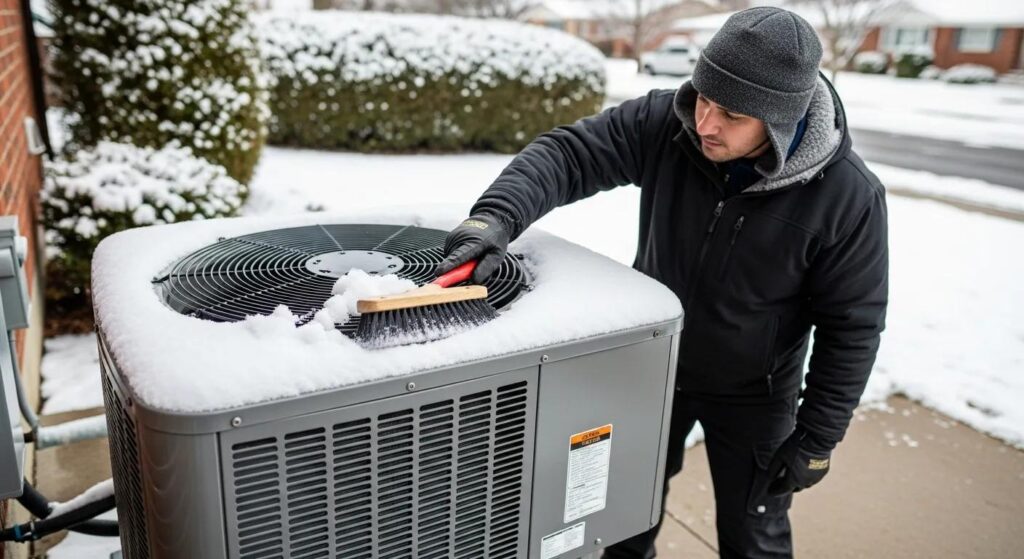
Keep at least 2–3 feet of clearance around outdoor condensing units and clear leaves, mulch, and debris that trap moisture or ice against coils. For heat pumps, don’t pile snow or ice onto the unit — gently remove buildup and let defrost cycles run unobstructed. Brush light snow or frost away carefully rather than hitting coils, and for heavy ice consider professional de‑icing to avoid bent fins. If you see significant icing or damage, schedule pro service right away — running with restricted airflow or off‑balance parts can harm the compressor.
Regular outdoor‑unit care preserves airflow and reduces the chance of winter mechanical failures.
How Does Winter HVAC Maintenance Differ for Furnaces and Heat Pumps?
Winter checks differ because furnaces and heat pumps generate heat differently and face different stresses. Furnaces need combustion‑focused checks — burners, heat exchanger, gas pressure, and venting — while heat pumps require attention to refrigerant charge, defrost cycles, and outdoor‑unit protection to maintain reverse‑cycle performance. Both systems benefit from an annual tune‑up, but the diagnostic focus and common failure modes vary, so choose technicians familiar with your system type.
What Are the Unique Furnace Inspection and Cleaning Requirements?
Furnace checks focus on combustion safety: technicians inspect the heat exchanger for cracks, verify burner flame and combustion efficiency, check gas connections and pressure, and test ignition and safety switches. Cleaning burners and clearing combustion passages removes soot and improves heat transfer, lowering fuel use. Tests for flame sensors and limit switches reduce the risk of unsafe operation. Any cracked heat exchanger or persistent soot needs immediate service. These checks protect both performance and occupant safety during continuous winter use.
How Should Heat Pumps Be Maintained for Optimal Winter Performance?
Heat pump winter maintenance ensures reliable reverse‑cycle heating: check refrigerant levels, inspect the reversing valve, confirm defrost function, and protect the outdoor unit from ice and debris. Technicians verify defrost timers and sensors, confirm refrigerant pressures are within spec, and ensure compressor and fan motors run smoothly in colder air. For systems with electric defrost or auxiliary heat, techs check electrical elements and sequencing to avoid unnecessary runtime and expense. Timely refrigerant and mechanical diagnostics keep efficiency up and extend heat pump life.
What DIY Winter HVAC Maintenance Tasks Can Homeowners Safely Perform?
Homeowners can handle several high‑impact, low‑risk tasks: change filters, program thermostats, test CO detectors, and keep outdoor units clear of debris. These actions improve airflow, maintain indoor air quality, and eliminate common, preventable causes of inefficiency — without exposing anyone to combustion or electrical hazards. You can also do a visual duct check in accessible areas and replace detector batteries. For combustion adjustments, refrigerant work, or electrical diagnosis, call a qualified technician.
Which Maintenance Tasks Are Safe for DIY Winter HVAC Care?
Safe DIY tasks include replacing or cleaning filters, programming thermostats for setbacks, testing and replacing CO detector batteries, clearing light debris from outdoor units, and visually inspecting accessible duct connections for obvious leaks. When changing filters, follow the slot orientation and seal the frame to prevent bypass; for thermostats, confirm sensor placement and schedule accuracy. These simple steps take minimal tools, prevent common efficiency losses, and help you spot early signs that need pro attention. Doing them monthly during heavy use keeps systems running smoothly and cuts avoidable service calls.
| Task | Difficulty / Safety | Recommended Frequency |
|---|---|---|
| Change air filter | Easy / DIY | Every 30–90 days |
| Program thermostat | Easy / DIY | Once per season / adjust as needed |
| Clear debris around outdoor unit | Easy / DIY | As needed after storms/snow |
| Inspect burners/heat exchanger | High / Call a pro | Annual professional tune-up |
| Refrigerant checks/repairs | High / Call a pro | As needed by technician |
Sometimes you’ll need a professional — Air Heat America offers emergency and seasonal service across Brookhaven and greater Atlanta. Our team is licensed and insured, and we provide upfront pricing and free estimates for new installs. If you prefer scheduled preventive plans or need immediate help for safety issues, call a local provider for a timely, qualified response.
When Should You Call a Professional HVAC Technician?
Call a professional right away for signs of combustion trouble (persistent pilot failure, soot, or a CO alarm), strange burning smells, no heat despite the system running, repeated short cycling, or electrical issues like breakers tripping with the HVAC. Schedule prompt service within days for unusual blower or compressor noises, sudden spikes in utility bills, or visible refrigerant leaks near outdoor units. Priorities: evacuate and call emergency services for CO alarms or gas odors; arrange same‑week service for no‑heat situations in cold weather; and schedule annual tune‑ups before winter to avoid emergency repairs. Quick professional action reduces risk and prevents small problems from becoming major failures.
Why Choose Air Heat America for Your Winter HVAC Maintenance in Atlanta and Brookhaven?
Air Heat America is a local, community‑focused HVAC partner serving Brookhaven and the greater Atlanta area. We emphasize certified technicians, transparent pricing, and respectful, on‑time service. Our techs follow proven preventive procedures; we’re licensed and insured to protect customers; and we give clear, upfront pricing to avoid surprises. Free estimates for new installs let you compare options with no obligation, and our friendly technicians work to make every service visit positive. For property managers and homeowners who want climate‑aware recommendations, Air Heat America pairs technical credentials with local knowledge to tailor maintenance plans for Georgia winters.
What Makes Our Certified Technicians the Best Choice?
Our technicians have passed industry exams covering diagnostics, system knowledge, and safety. Certified techs diagnose faster, perform safer combustion and refrigerant checks, and follow manufacturer procedures that help preserve warranties. For winter‑specific needs — heat exchanger inspections or defrost‑cycle tuning — our certified staff give the confidence that safety and efficiency items are handled thoroughly. Choosing certified technicians reduces guesswork and helps ensure reliable, compliant maintenance.
How Do Our Upfront Pricing and Free Estimates Benefit You?
Upfront pricing gives clear cost expectations before work starts, eliminating surprise charges and making budgeting for maintenance or repairs easier. Free estimates for new installs let homeowners and property owners compare replacement or upgrade options with transparent cost detail, so decisions factor in long‑term efficiency and local climate needs. These policies build trust, speed approvals, and reduce friction during urgent winter repairs. To request service or an estimate, contact our local office to schedule a visit with a clear scope and price.
How Does Our Local Atlanta Climate Expertise Improve Your HVAC Service?
Local climate expertise lets our technicians tailor recommendations — thermostat setback depth, duct insulation levels, and outdoor‑unit protection — to the mild but changeable winters in Atlanta and Brookhaven. For example, advice on setback depth, auxiliary heat use, or defrost timing balances fuel costs against comfort for occasional freezes rather than prolonged cold. That regional experience also guides system sizing, ventilation rates, and seasonal timing to reduce cold‑weather emergencies. Local knowledge helps customers avoid over‑ or under‑specifying equipment and improves performance through winter conditions.
What Are Common Questions About Winter HVAC Maintenance?
This section answers frequent questions quickly so homeowners and facility managers can make timely decisions about inspections, tune‑ups, indoor air quality, and recognizing service needs. Each short answer gives practical next steps to prioritize before winter’s peak demand.
How Often Should HVAC Systems Be Serviced During Winter?
Residential systems should get at least one professional tune‑up a year, ideally in the fall before heavy heating begins; high‑use or older systems may benefit from semi‑annual checks. Commercial systems and facilities with continuous operation often need a tailored, more frequent inspection plan to avoid downtime. For heat pumps, a focused pre‑winter inspection ensures refrigerant, defrost, and outdoor‑unit protections are ready for colder periods. Scheduling ahead of seasonal demand secures faster appointments and avoids emergency surges.
What Is Included in a Typical Winter HVAC Tune-Up?
A typical winter tune‑up includes inspection and cleaning of burners or heat pump components, verification of electrical connections and controls, filter checks and recommended replacements, thermostat calibration, visible duct inspection for leaks, and safety tests for carbon monoxide and combustion. Optional add‑ons can include duct sealing, indoor air quality upgrades, and refrigerant charge verification for heat pumps. Technicians document findings, recommend prioritized repairs, and provide upfront pricing estimates for any needed work. This standardized scope helps maximize efficiency and safety during winter operation.
- Core inspection and safety tests: Confirm safe operation before heavy seasonal use.
- Airflow and filtration: Replace filters and inspect blower components for proper airflow.
- System-specific cleaning and calibration: Clean burners or verify refrigerant and defrost cycles.
How Can I Improve Indoor Air Quality During Winter?
Improving indoor air quality (IAQ) in winter focuses on better filtration, balanced humidity, and controlled ventilation since windows stay closed. Upgrade to higher‑efficiency pleated filters that are compatible with your system, consider portable or whole‑house air purifiers, and keep relative humidity around 30–50% to control particulates and comfort. Periodic duct cleaning helps in systems with heavy dust buildup, and proper ventilation for combustion appliances preserves IAQ and safety. Combining filter upgrades with scheduled maintenance keeps both airflow and filtration effective all winter.
What Are the Signs That My Heating System Needs Maintenance?
Signs you need service include uneven heating between rooms, unusual noises like grinding or banging, persistent burning or gas odors, frequent cycling on and off, and sudden unexplained spikes in energy bills. Carbon monoxide alarms, visible soot near combustion appliances, or pilot/ignition failures are urgent—call a professional immediately. Scheduling service soon after you notice these symptoms reduces the chance of total system failure during cold weather; noting symptoms for the technician helps them prioritize diagnostics. Acting quickly protects people and reduces repair costs over time.
Frequently Asked Questions
What should I do if my HVAC system is making unusual noises during winter?
Unusual noises — grinding, banging, hissing — often point to mechanical problems like loose parts, worn components, or airflow blockages. Address these noises quickly; left unchecked they can lead to bigger failures. Schedule a professional inspection to diagnose and fix the issue so your system runs safely and efficiently through winter.
How can I tell if my HVAC system is running efficiently?
Monitor your energy bills for sudden increases and check for consistent temperatures around the home. Uneven heating can indicate airflow or ductwork problems. Regular tasks like changing filters and scheduling tune‑ups also preserve efficiency. If you notice noise, reduced comfort, or higher bills, call a professional for a full evaluation.
What are the risks of neglecting winter HVAC maintenance?
Skipping winter maintenance raises energy costs, reduces system efficiency, and increases the risk of unexpected breakdowns. Small issues can escalate into costly repairs or complete failure. Neglect can also hurt indoor air quality and safety, increasing the chance of carbon monoxide leaks or fire hazards. Prioritizing maintenance helps your system run safely and efficiently all season.
Can I perform HVAC maintenance tasks myself, or should I always hire a professional?
Some tasks are safe for homeowners — changing filters, clearing light debris from outdoor units, and testing CO detectors. More complex jobs, like inspecting burners, checking refrigerant, or performing combustion analysis, require specialized tools and training and should be left to professionals. Do simple, low‑risk tasks yourself and schedule professional tune‑ups for technical maintenance.
What should I do if my carbon monoxide detector goes off?
If your CO detector sounds, evacuate everyone immediately and get fresh air. Don’t ignore the alarm — carbon monoxide is colorless and odorless and can be deadly. Once outside, call emergency services or a qualified technician to inspect your heating system and venting before reentering. Regular system checks and functioning detectors are essential protection.
How can I prepare my HVAC system for unexpected cold snaps?
Prepare for cold snaps by completing key maintenance tasks: change filters, seal ductwork, and test your thermostat. Insulate exposed pipes and keep outdoor units clear of snow and ice. A pre‑winter tune‑up helps identify potential issues, and keeping emergency contact info for an HVAC technician ensures prompt help during extreme weather.
What are the benefits of using a smart thermostat during winter?
Smart thermostats boost comfort and efficiency. They learn schedules, automate setbacks, and can be controlled remotely from your phone. Many offer energy‑use reports to spot savings opportunities. Smart features like geofencing and adaptive recovery help reduce wasted runtime while keeping your home comfortable.
Conclusion
Regular winter HVAC maintenance is essential for safe, efficient, and reliable heating. Following a clear checklist and addressing core components reduces the chance of costly breakdowns and improves indoor air quality. For customized maintenance plans and expert service in Atlanta and Brookhaven, contact Air Heat America. Schedule your tune‑up today to keep your home warm and efficient all winter.